The Karriem De Jongh family's enduring legacy in Constantia
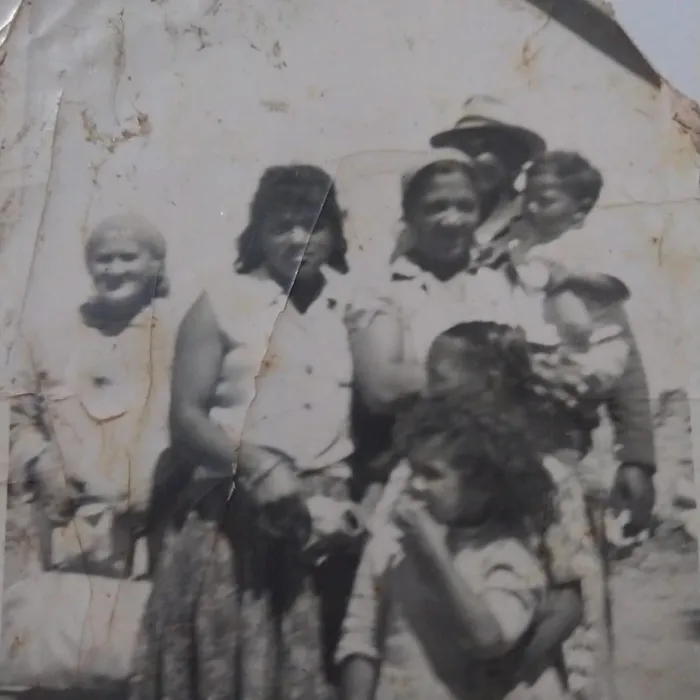
An undated photo of the Karriem De Jongh family at the Spaanschemat River in Constantia. From left are Aira De Jongh, Fatima Karriem, Layla De Jongh and Abduraghman De Jongh with baby Yusuf De Jongh. In front are Aziza De Jongh and Gaironesa De Jongh.
Image: Supplied
The story of the Karriem De Jongh family, whose ancestors once lived and worked on Strawberry Lane in Constantia, has been shared by Sean Karriem, a descendant of the family.
He said the aim is to ensure their history is not lost in the modern-day landscape of the area.
For more than 60 years, according to Mr Karriem, the Karriem De Jongh family’s presence in Strawberry Lane went largely unrecorded, despite generations having lived and worked on the land.
He said he hopes that sharing the story will draw attention to the injustice his family experienced under apartheid-era laws, particularly the Group Areas Act of 1965.
The family’s roots in Constantia date back to the late 1800s.
Mr Karriem’s great-grandfather, Abdul Karriem De Jongh, owned two small plots on Strawberry Lane - Erf 2529 and Erf 2467 - where the family grew vegetables and flowers.
Water for the land came from two canals that crossed the property, as well as a household well that sustained both crops and daily life.
According to Mr Karriem, land ownership for a coloured family at the time carried deep meaning. It was not only practical but symbolic of freedom and dignity.
“Every stone, every canal, every memory that endures carries their footprints,” he said. “The strength and sacrifice of my ancestors live on through us.”
That connection was broken in the 1950s as apartheid legislation tightened its grip.
In 1953, Erf 2529 was expropriated by the Cape Divisional Council, with compensation of just £112 (about R224 at the time). Continued pressure followed, and in 1968, the family was forced to sell Erf 2467 to Neville William Riley for £11,000 (about R22 000 at the time).
Mr Karriem said the sale was not a willing one, but an act of survival.
He reflected on the moment his great-grandfather left the land for the last time.
“My great-grandfather never talked much about that day. But I imagine the silence when he locked the door for the last time. I imagine him turning back one more time to look at the rows of vegetables, the flowers, the small canals glistening in the sun - all the things he had built with his hands, all left behind.”
He said the land had been more than property - it was the family’s story written into the soil.
“Losing it was like losing a part of who we were."
Walking through Constantia today, Mr Karriem said he tries to picture the area as it once was - not defined by luxury homes and vineyards, but by families like his own, who planted hope, harvested dignity, and were ultimately displaced by laws that prioritised race over humanity.
He believes stories like his family’s are often missing from the written history of places such as Constantia.
He believes stories like his family’s are often missing from the written history of places such as Constantia.
"Official narratives have traditionally centred on colonial estates and wealthy landowners, while erasing the experiences of enslaved people, labourers, domestic workers, and families forcibly removed under apartheid."
Family histories, he said, help preserve oral memory where documentation was destroyed or never formally recorded.
They reveal patterns of forced removals, broken communities, and resilience across generations, and play an important role in shaping broader conversations about land, memory, and belonging in South Africa today.
“My grandfather’s hands are long gone from the soil of Strawberry Lane, but his spirit remains there,” Mr Karriem said.
“It lives in the canals that once carried water, in the stories passed down, and in the determination of those of us who remember.”
Although the family no longer owns the land, he said their roots remain.
“We may not have the land back yet, but we have reclaimed the story - and that, too, is a kind of homecoming.”
Reflecting on what he hopes future generations will understand, Mr Karriem said it is important for them to know where the family came from and what Strawberry Lane represented.
“Our family’s story on Strawberry Lane is more than a story of loss - it is one of endurance, love, and belonging,” he said.
“Though the land was taken, the spirit of the Karriem De Jongh family remains unshaken. May future generations walk with pride, knowing where we come from, and may they always remember that our roots - though displaced - still grow deep in the soil of Constantia.”
He added that the family is currently engaging with the Department of Land Claims to seek either compensation or alternative land.
Find Constantiaberg Bulletin on TikTok or Instagram @ccmonlineza